Start with the current property and planning records
Journal Square includes transit, housing, retail space, and redevelopment activity. A clear property review begins with the current records for the exact address and nearby blocks.
This article explains how to read planning and property information in plain language. It is general property information only. It is not tax, legal, financial, zoning, or real estate advice.
In This Guide
Three checks for a Journal Square property review
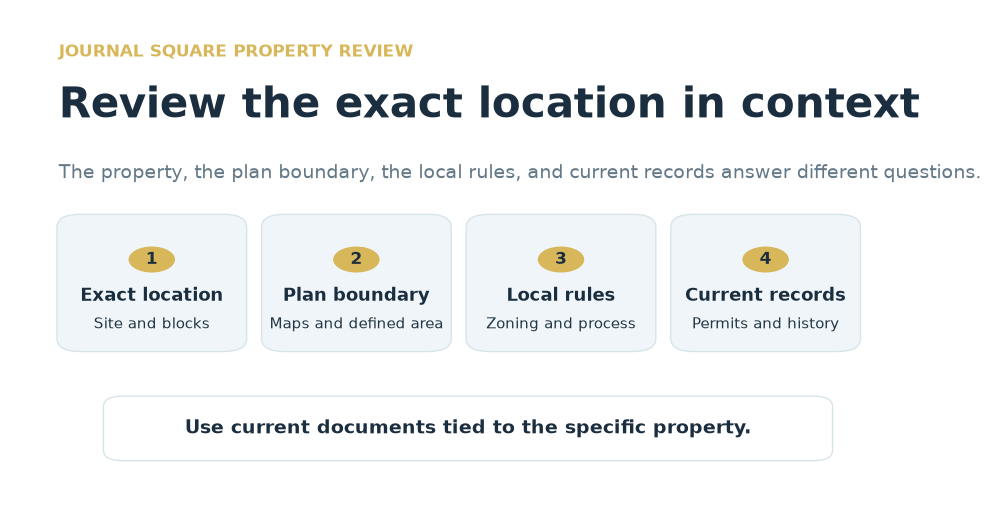
Check the location
Use the exact address, nearby blocks, and current site records.
Check local rules
Read current zoning material and the plan that applies.
Check current documents
Keep permits, approvals, building records, and maps together.
What the Journal Square 2060 Plan is
The Journal Square 2060 Redevelopment Plan is a City of Jersey City planning document for a defined area around the transportation center. It describes land use, building form, public areas, and redevelopment goals for that area. [1]
The plan provides local context. It does not replace the current zoning rules, permits, approvals, or site records for a specific property.
Use the exact location, plan boundary, local rules, and current records as separate parts of the review. [1]
Why nearby development records matter
Nearby projects can change a street or block over time. The most useful information comes from current public records, planning documents, permits, and approved materials.
Separate a completed project, an active approval, and an early proposal. Each stage provides different information and may change before construction begins.
Review current zoning material and City process guidance for the specific address. The Division of Zoning is an official starting point for that information. [2]
What to keep in a property file
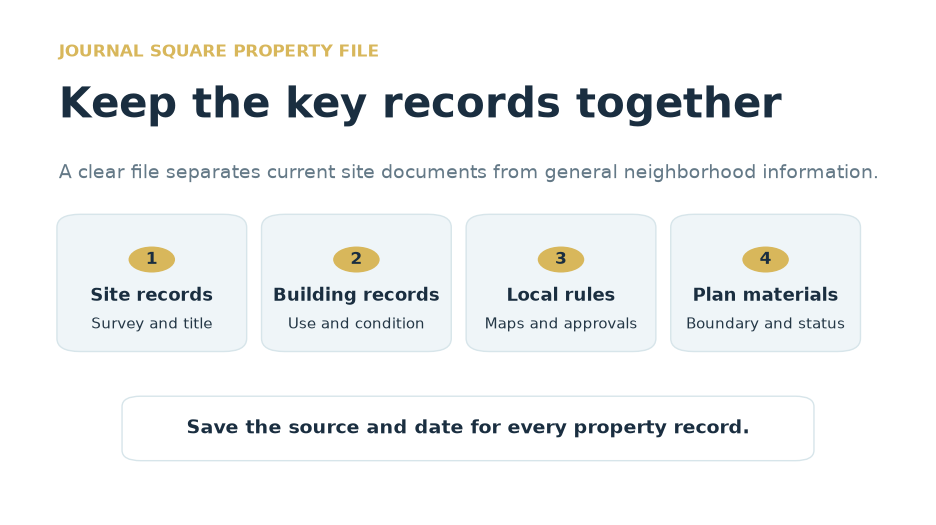
Keep the zoning map, permits, property survey, title information, building records, and relevant approvals in one current file. Save the source and date for each document.
For an existing building, include records that describe its condition, current use, and known maintenance history. For a proposed change, include the local materials that describe the requested work and status.
Use documents tied to the exact site. A broad neighborhood description does not show the full record for one property.
Keep site, building, local-rule, and current-plan materials together while keeping their sources clear.
How to read local market information
Market reports and property listings can provide general context. They should not be treated as a complete source for one property or block.
Check the date, coverage area, property type, and method behind any market figure. A broad figure may not describe the current condition, legal use, or records of a specific address.
For a site-specific question, use the current property file and current City materials first. A qualified professional can help with questions that depend on the exact property facts.
Questions for a qualified professional
Ask which local records are needed to review the exact site. Ask what information is missing, dated, or based on a general statement instead of a current document.
Ask how zoning, permits, legal use, building condition, title, and local approvals may apply to the property. Different questions may require different qualified professionals.
Ask for clear support for any conclusion about a building or plan. Complete current records make the conversation easier to understand.
Sources
Sources for further verification
Use current official sources when reviewing a specific property or local process.
It is a City of Jersey City planning document for a defined area around the Journal Square Transportation Center. It describes redevelopment goals, land use, and building form for that area. [1]
No. Read the plan boundaries and maps before connecting the plan to a specific address. Other zoning rules or local plans may apply.
Review current public records, permits, planning materials, and City guidance. Separate a completed project, an active approval, and an early proposal.
Jersey City’s Division of Zoning is the official starting point for current zoning information and process guidance. [2]
Considering a Sale?
Talk to X1031 Exchange Before Your Closing
Contact X1031 Exchange to learn about the company’s services. For tax, legal, financial, zoning, or real estate advice, work with your own qualified professionals.