What is a cap rate?
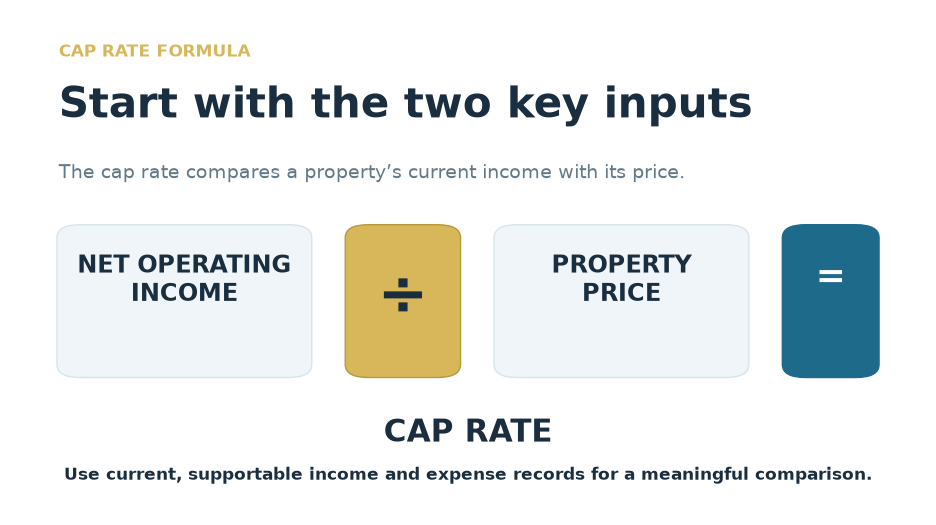
A cap rate shows the relationship between a property’s NOI and its value or purchase price. NOI is the income left after operating expenses, before mortgage payments.
A cap rate is not a full return calculation. It does not show loan payments, future rent changes, or a future sale value.
What to compare before using a cap rate
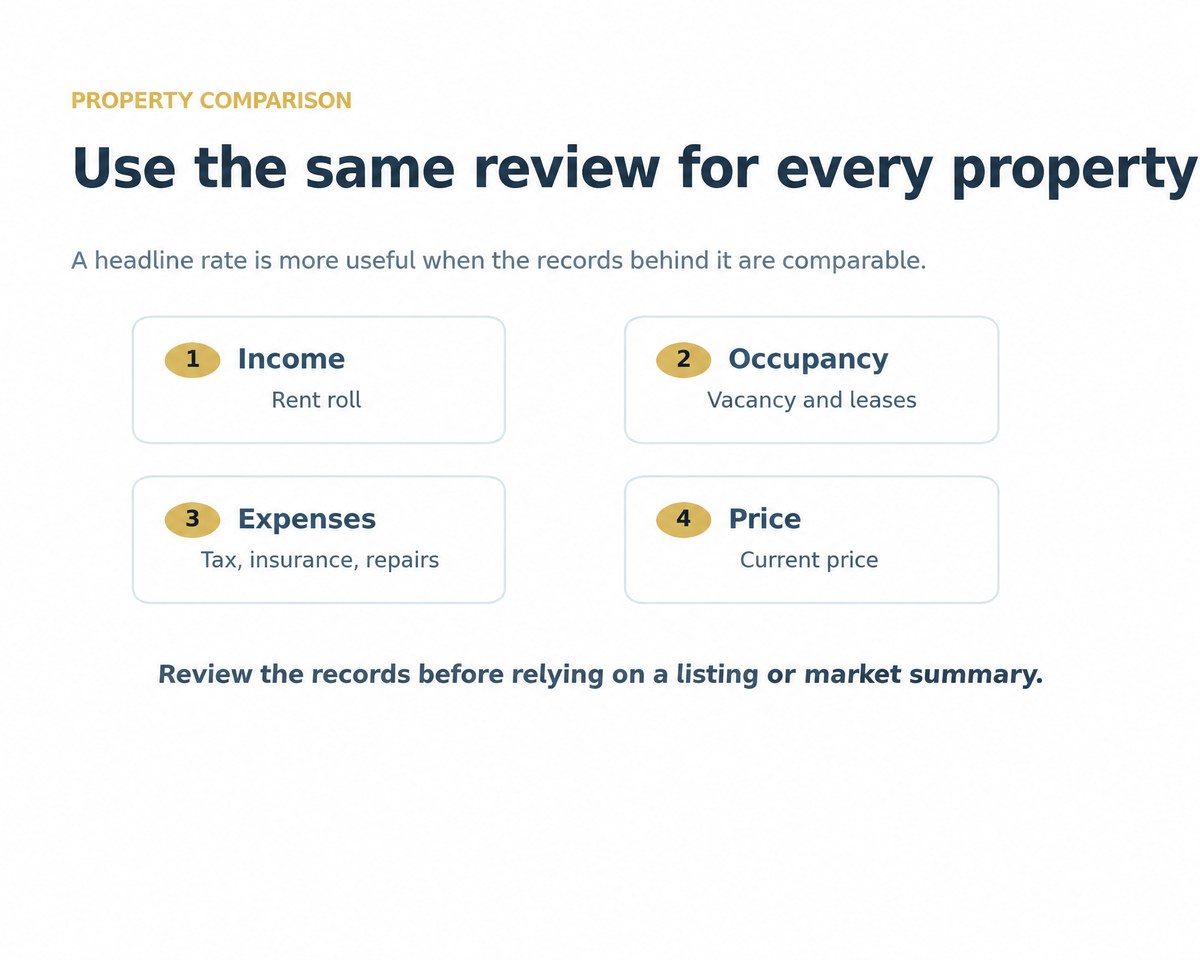
Start with the rent roll, occupancy, lease terms, and operating expenses. Use current records where available instead of relying only on a listing summary.
Then compare similar buildings. A mixed-use building may need a different review from a residential rental because the commercial space can have different renewal and operating needs.
Sources
Sources for further verification
Use current primary and institutional sources when reviewing a specific property.
Frequently Asked Questions
A cap rate is NOI divided by a property’s value or price.
No. A cap rate does not include loan payments, future rent changes, or a future sale price.
Review the rent roll, operating expenses, tax information, insurance costs, lease details, and recent property records.
Considering a Sale?
Talk to X1031 Exchange Before Your Closing
Contact X1031 Exchange to learn about the company’s services. For tax, legal, financial, or real estate advice, work with your own qualified professionals.
Tax Advice Disclaimer
The information in this article does not constitute tax advice. Consult a qualified tax professional about your specific circumstances.